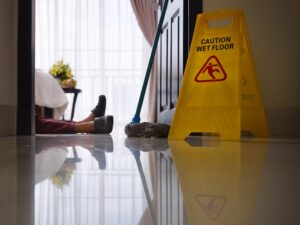
A negligent landlord can cause big problems for tenants and their guests, especially when it comes to unsafe premises. Poorly lit hallways or staircases, faulty wiring, slick sidewalks, and other hazards can all result in serious injuries, and your landlord may be legally on the hook.
Similarly to other accidents resulting from negligence, your landlord can be held liable for medical expenses, lost time from work, home health workers or assistants, and other injury-related costs.
At Buttafuoco & Associates, we fight for tenants’ rights after an injury a landlord could have prevented. Read more about your rights below, or get in touch for a free case consultation with a Buttafuoco & Associates New York premises liability attorney at 1-800-NOW-HURT.
Are Landlords Responsible for Tenant and Guest Safety?
In the State of New York, a number of laws are in place to protect the safety of tenants and their visitors. First, under the warranty of habitability, residential landlords must maintain safe and habitable living environments for tenants. This includes:
- Maintaining safe hallways, stairwells, and entryways
- Making necessary repairs to rental units in a timely manner, including any that pose a safety risk
- Removing snow and ice from sidewalks, driveways, and parking lots to prevent slips and falls within specific time frames after snow ends
- Protecting tenants from lead-based paint exposure
- Complying with local building codes and other safety regulations
- Responding to tenant safety concerns promptly and effectively
While a landlord is not always responsible for injuries to a tenant or their guest, they are often liable in situations like those listed above due to what is known as duty to repair. This simply means that if anything within a unit or common area is in disrepair, the landlord is legally required to fix it.
If you are unsure whether your specific circumstances warrant bringing a lawsuit against your landlord, working with a premises liability attorney in New York can help clarify your rights.
When are Landlords Not Responsible for Visitor Injuries?
In most cases, New York law recognizes that landlords are responsible for the safety of visitors, but this depends on the legality of the visit.
For example, those who have permission from the landlord or tenant to be on the property, including social guests, receive the same duty of care from landlords as tenants do.
On the other hand, trespassers who are not invited by the landlord or tenant to enter the premises and do not have permission to be there do not receive the same duty of care.
One exception to this rule is if a minor under the age of 18 tresspasses on a property, landlords can be held liable under what is known as the “attractive nuisance doctrine.” If a specific, unsafe area of the premises is attractive to children and a child trespasser is injured, as long as the landlord knew about the hazard they would be responsible for the child’s injuries.
How To Prove Landlord Negligence in a Rental Injury
If you or a guest has been injured and you believe the landlord is responsible, you may be eligible to file a personal injury case suing for injury-related damages.
However, you must first prove all of the following:
- The landlord owed a duty of care to you and/or your guest
- The landlord breached this duty of care by not warning about an unsafe condition that then caused injury
- The landlord knew about the unsafe condition that caused the injury
- The tenant or guest suffered injuries resulting in damages due to the breach
If the landlord created or was aware of a dangerous situation they knew could cause injury and a tenant or guest is injured, they can be subjected to a lawsuit. Even if a landlord attempted to repair the dangerous situation, if those repairs were not successful, they can still be held responsible.
Likewise, if they violated city code, or the accident happened in an unmaintained common area and this resulted in injury, the landlord could be held liable.
When is the Tenant Responsible For Injuries?
While landlords are often responsible for injuries that occur on their premises, this is not always the case.
For example, if the tenant’s conduct was the sole cause of their injuries, the landlord cannot be considered legally responsible, even as the owner of the location where the accident took place.
However, if the tenant exercised reasonable care, equivalent to what an average person would take in a similar situation, then they are likely not responsible for their own injuries.
Under New York’s comparative negligence laws, if the tenant or guest was in any way responsible for their own injuries due to a failure to exercise reasonable care, they may be considered partially responsible for their injuries.
In this case, a percentage of negligence will be determined and their damages will be reduced by this percentage.
For example, a tenant who was distracted because they were texting when they tripped on a loose board may be determined to be 20 percent responsible for their injuries, while the landlord is considered 80 percent responsible. The tenant’s compensation would be reduced by 20 percent.
In a similar scenario, if the tenant or guest has assumed the risk of damage caused by the landlord’s negligence–in other words, if they were aware of the risk of injury and ignored the risk, voluntarily proceeding with their actions and becoming injured, they can be denied compensation.
When to Consult a New York Premises Liability Lawyer
Negligent landlords must be held responsible for endangering your health and safety. If you have been injured and feel that your landlord’s carelessness caused your accident, knowing your rights could be essential to recovering the compensation you need to make a complete recovery.
At Buttafuoco & Associates, our team works closely with all clients: gathering necessary evidence, building a strong case, calling experts to testify if needed, and fighting for your rights.
Call today for a free consultation. 1-800-NOW-HURT